Showing posts with label things to do. Show all posts

Sunday, April 17, 2022

Fish N Paddle Saltwater Slam Kayak -SOK Fishing Tournament

summer flounder
Summer Flounder
The Fish N Paddle Saltwater Slam Kayak Fishing Tournament and Stand Up Paddleboard Fishing Tournament will be held June 25-26, 2022 in Ocean City, Maryland.

This tournament format includes no minimum number of anglers and over $7,000 cash purse to be distributed to the top three anglers.

During the tournament, kayak anglers can experience why Ocean City, Maryland, is known as "The Fishing Tournament Capital of the World."

Tournament anglers can fish the back bays and inshore ocean for the following qualified species:

Flounder

Striped Bass (aka, Rockfish or Stripers)

Bluefish

Sea Trout (Grey Trout, Speckled Trout)

Bottom Fish (Sheepshead, Triggerfish, Spadefish, Black Sea Bass, Spot, Croaker)

Cobia

Red and Black Drum

Spanish and King Mackerel    

Winnings will be based upon combined weighed in points of each angler's top three fish of any qualifying species over 2 days.  Anglers can even have 3 of the same qualifying species to win.

$7000 Guaranteed Payout with No Minimum Number of Anglers:

1st   Place- $4000

2nd Place- $2000

3rd  Place- $1000

4th Place- (New For 2022) Lightning Strike Pedal Drive Kayak

Anglers can also participate in optional entry levels to win awards, money, and prizes. Prizes include a $3000 Los Buzos Panama Stay and Hosted Fishing Trip with Robert Field, a fishing stand up paddleboard from NRS, custom fishing rods and reels, depth finder, sunglasses, coolers, and other prizes.

Daily winners will be chosen for each qualifying species and the tournament features a new Junior Angler Division. The tournament will also include a kickoff party and weigh in festivities for anglers and spectators.

Ocean City Maryland is known for its inshore fishing areas. Popular fishing locations include the route 50 bridge, route 90 bridge, inlet jetties, Thorofare, Sinepuxent Bay, Verrazano Bridge, and others.

For more information, visit fishnpaddle.com.

Related Information

Ocean City Saltwater Fishing

Things To Do In Ocean City

Thursday, April 7, 2022

2022 Paddle for the Border - Dismal Swamp Canal

17th Annual Paddle for the Border
Saturday May 7th, 2022
Dismal Swamp State Park - South Mills, North Carolina (launch)
Great Dismal Swamp Boat Ramp - Ballahack Rd., Chesapeake, VA (finish)
* Registration Closed *

Dismal Swamp Canal
Dismal Swamp Canal
The 2022 Dismal Swamp Canal Paddle for the Border is expected to attract paddlers from all over Virginia. In February, due to popularity, registration closed for the annual 7.5-mile paddling excursion to the North Carolina/Virginia border. The event is sponsored by the City of Chesapeake Parks and Recreation.

After enjoying a traditional pre-launch breakfast at the Dismal Swamp State Park, in South Mills, North Carolina, paddlers will embark on the leisurely three-hour journey to cross the state line.

Paddlers finish the day out with a picnic lunch on grounds of the Dismal Swamp Canal Trail at the Great Dismal Swamp Boat Ramp at Ballahack Rd. in Chesapeake, VA.

The 2022 Paddle for the Border in Dismal Swamp Canal will begin on May 7, 2022 at 7:30 a.m. and end around 2:30 p.m. Mariners are requested to use caution when transiting the area.

More information about the event can be found at www.dismalswampwelcomecenter.com or www.cityofchesapeake.net.

Related Information

Best Areas for Kayaking in Hampton Roads Virginia

Sunday, March 6, 2022

Pre-Season Kayaking Things To Do

Recreational Sit In Kayak

This article includes ideas for creating a pre-season to do list and other tasks that need to be done before the next kayaking season gets underway.

One of the first tasks is to begin a thorough inspection of kayaks, safety equipment, and other gear.

Prior to the start of the season, kayaks and other paddlecraft usually need to be inspected for any damage or other problems.

It may be a good idea to check for any deformation of the hull that may have occurred during the previous season or during winter storage.

Simple kayaks may require little pre-season work other than inspection, cleaning, and a fresh coating of UV protectant.

Other models may need additional work. Items such as cordage, hatches, attachment systems, rudders, and anchor trollies will need a complete inspection, cleaning, and functional check.

Kayak accessories should also receive a close inspection, and if needed, service or replacement.

Paddles should be checked for cracks, excessive wear, or other structural problems. Two-piece paddles usually need to have the connection points cleaned and lubricated.

Electronic devices may need service including charging or replacing batteries, inspection, cleaning, and performance testing.

It is also important to check gear related to kayak transportation, loading, and unloading. Trailers, carts, rooftop systems, and other equipment should be inspected and maintained if necessary.

Before beginning the season, it may be necessary to review launch permits, licenses, and other regulatory documents. 

Most kayakers choose to display some form of vessel identification sticker which may need servicing or replacement.

After a complete inspection, service, and cleaning, most kayaks will be ready to launch.

Related Information

Essential Kayaking Gear

Wednesday, November 25, 2020

Chesapeake Bay Kayaking: Eastern Shore Rivers

This article includes information on rivers and creeks on the Eastern Shore of Maryland.

Relatively large rivers of the Eastern Shore include the Northeast, Bohemia, Elk, Sassafras, Chester, Wye, Miles, Tred Avon, Choptank, Little Choptank, Blackwater, Nanticoke, Wicomico, and Pocomoke.

In addition to major rivers, there are hundreds of smaller tributaries, creeks, and streams.

The Elk River has a variety of special conditions that paddlers may find interesting. Below Elkton, the Chesapeake and Delaware Canal connects to the river. A variety of public access sites are located up and down the river.

The Chester River flows through Chestertown before emptying into the Chesapeake Bay near Kent Island. The town's annual Downrigging Weekend Tall Ship and Wooden Boat Festival attracts large numbers of historic vessel enthusiasts.

The Choptank River flows through several historic towns and small communities. Near its mouth, Cambridge includes an array of areas where paddlers can launch and explore the river.

At Blackwater National Wildlife Refuge, three paddling trails meander through more than 20 miles of salt marshes. The Blackwater River complex is one of the most popular areas in the Chesapeake Bay for catching northern snakehead.

One of the largest rivers in the Chesapeake Bay watershed, the Nanticoke River is known for its wildlife. Along its banks are Seaford, Blades, Woodland, Vienna, Tyaskin, Bivalve, Nanticoke, Elliot's Island, and other communities.

Public access sites are found throughout the Nanticoke. Along the river are several notable parks including Seaford, Phillips Landing Recreation Area, Cherry Park (Sharptown), and Vienna Waterfront Park. Additional areas for launching kayaks and other paddlecraft exist at Woodland, Elliot's Island, Tyaskin, and Nanticoke.

Along the Wicomico River is mix of urban properties, industrial sites, waterfront neighborhoods, marinas, and other human activity. Public access can be found in Salisbury, Mount Vernon, and Dames Quarter.

The Pocomoke River is known for its extensive cypress swamp habitats. Kayakers can explore the Pocomoke River by launching at Porter's Crossing, Snow Hill, Pocomoke River State Park, Pocomoke City, and Shelltown.

Related Information

Blackwater National Wildlife Refuge Paddling Trails

Best Kayaking Areas in Maryland

Sunday, June 19, 2016

Ohio Paddlesports Popularity

Paddlesports in Ohio have increased in popularity over the past several years, according to the Ohio Department of Natural Resources (ODNR).

In 2015, more than 161,000 Ohioans registered canoes, kayaks or other paddle-specific watercraft. Over the last decade (2006-2015), Ohio’s kayak and canoe registrations (including liveries) have increased 138 percent.

The state expects the sport to grow as the state continues to invest in the paddling community.

From 2006 to 2015, more than $7 million was provided through community grant programs and publications. support provided carry-in and small boat access, as well as hands-on skill development through local education and recreation programs, including Paddle Palooza festivals and the Paddle Ohio program.

It also funded publications detailing stream access and paddling opportunities.

Ohio's water resources include 451 miles of the Ohio River, approximately one-third the entire surface area of Lake Erie, more than 605 inland lakes and more than 60,000 miles of inland streams, rivers and, other waterways.

Ohio is one of only seven states in the nation where admission and parking at state parks are free.

For more information, visit the ODNR website at ohiodnr.com.

source: Ohio Department of Natural Resources

Tuesday, September 1, 2015

Kayaks vs. Canoes at North Bend State Park WV

At North Bend State Park in West Virginia, beginning paddlers can choose a kayak, canoe, or both as part of the Quest program.

The Park's Quest program will continue offering kayak or canoe adventures on North Bend Lake into September.

“The Quest program caught the attention of many people this summer,” said North Bend State Park Supt. Steve Jones. “By far, the most requested activity was learning how to use a kayak or a canoe.”

Quest rates have been reduced to encourage mid-week fall bookings. Two people can stay overnight at North Bend Lodge Sunday through Thursday and have use of a kayak or canoe with instruction.

The 305-acre North Bend Lake is quiet and a perfect setting to enjoy a September getaway, according to Park officials.

The park also features an October mid-week reduced lodge rate for travelers “leaf peeping” in the Ritchie county area.

To learn more about North Bend State Park and its Quest program, visit www.northbendsp.com or call 304-643-2931.

source: West Virginia Division of Natural Resources (www.wvdnr.gov)

Thursday, July 16, 2015

PFBC Kayak Fishing Programs

The Pennsylvania Fish and Boat Commission (PFBC) has scheduled two programs to provide an opportunity for anglers or kayak enthusiasts to learn about the basics of in kayak fishing.

PFBC Kayak Fishing Programs will be held at these locations:

July 18, Bald Eagle State Park – Hunter Run East launch, Centre County, 9 a.m. – 1 p.m.  (For more information or to register)

August 1, Moraine State Park – Bear Run launch, Butler County, 9 a.m. – 1 p.m. (For more information or to register)

“During each program, participants will learn about basic kayak skills and safety, how to rig or outfit a kayak for fishing, and learn about black bass and panfish fishing techniques,” said Carl Richardson, PFBC Education Section Manager. “Commission staff and local kayak fishing experts will lead the instruction. Participants will then have an opportunity to make use of what they learned during an open fishing session.”

Jeff Woleslagle will be the guest instructor at the July 18 program. He is a freelance writer for the Pennsylvania Angler and Boater magazine with an expertise in kayak fishing.

Noah Heck will be the guest instructor at the August 1 program. He is an avid kayak angler who is the co-founder of the Kayak Anglers of Western PA tournament series.

Participants must be 16 years of age or older and have a valid Pennsylvania fishing license. This program is limited to 40 participants and pre-registration is required. There will be no registrations accepted the day of the event.

source: Pennsylvania Fish and Boat Commission

Tuesday, July 1, 2014

Paddle Ohio

The Ohio Department of Natural Resources (ODNR) recently launched the Paddle Ohio initiative to promote paddling on Ohio's state-designated wild, scenic and recreational rivers and water trails.

The Paddle Ohio initiative will reward individuals who paddle four of Ohio's wild, scenic and recreational rivers or water trails with a commemorative pin. Participants simply submit information about their four paddling trips on the Paddle Ohio registration form at paddle.ohiodnr.gov, and ODNR will mail the pin to qualifying individuals.

Future plans include a series of pins paddlers will be able to collect for paddling up to 20 different segments of Ohio's wild, scenic and recreational rivers or water trails.

Ohio pioneered the river preservation movement in 1968 with the passage of the nation's first scenic rivers act. This legislation created a state movement to protect Ohio's high quality streams for future generations.

Information on Ohio's scenic rivers and water trails is available from the ODNR Division of Watercraft at watercraft.ohiodnr.gov/scenicrivers.

source: Ohio Department of Natural Resources

Monday, June 16, 2014

Maryland Park Quest 2014

Around 1,000 teams are expected to participate in Park Quest 2014, a family-based outdoor recreational program of kayaking, hiking, biking and historical adventures in 24 of Maryland’s State Parks.

Park Quest 2014 is one of several events held during Great Outdoors Month in Maryland. For more information, visit http://news.maryland.gov/dnr/2014/06/02/june-is-great-outdoors-month/

source: MD DNR

Tuesday, June 3, 2014

Best Areas for Kayaking in Hampton Roads Virginia

Hampton Roads Virginia is one of the best areas in the Mid Atlantic for kayaking. Paddlesports enthusiasts can explore the Atlantic Ocean, Chesapeake Bay, local rivers, creeks, canals, lakes, ponds, salt marshes, and other areas.

Ocean kayakers launch along beaches or inlets from Virginia Beach to Sandbridge. To reach the Chesapeake Bay, kayakers depart from Hampton, Norfolk, or Virginia Beach. All three cities provide parks and ramps where kayakers can launch their craft.

Virginia's Hampton Roads region is a maze of rivers, creeks, and tidal lagoons. Kayakers explore the James, Nanesemond, Elizabeth, Lafayette, Back, and Lynnhaven Rivers. Some estuaries, such as the Elizabeth River, contain designated water trails.

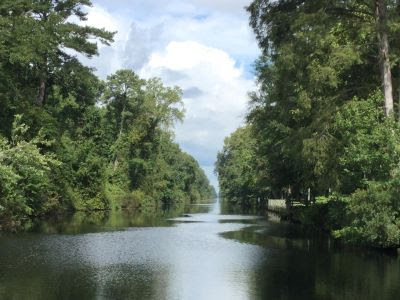
Dismal Swamp Canal
Canals are another option for kayakers. In the heart of Hampton Roads, numerous canals interconnect between the Elizabeth River, Lake Drummond, and Albemarle Sound.

Once part of the Intercoastal Waterway, the canals sustain a variety of wildlife, fish, wild plants, and other inhabitants.

Hampton Roads is home to two National Wildlife Refuges, Dismal Swamp National Wildlife Refuge and Back Bay National Wildlife Refuge. Both facilities contain areas for recreational kayaking, kayak fishing, wildlife watching, and other activities.

Areas suitable for kayaking can also be found at First Landing State Park and False Cape State Park. Both parks contain sheltered areas as well as open water for more experienced paddlers.


Thursday, December 27, 2012

Pennsylvania Water Trails Programs

Water trails in Pennsylvania are being promoted by partnership of DCNR, the Fish and Boat Commission, Pennsylvania Environmental Council, and the National Park Service.

The Pennsylvania Water Trails Program was created to expand, connect, and promote Pennsylvania's water trails system.

Pennsylvania water trails include access points, boat launches, day use sites and some overnight camping sites on or along waterways.

A recent study focused on visitors to four Pennsylvania water trails during the summer of 2012. According to the study, the trips generated almost three-quarters of a million dollars in economic activity and supported 11 full-time jobs in the state.

For Pennsylvania water trail information, visit fishandboat.com

source: Pennsylvania Fish and Boat Commission

Saturday, March 31, 2012

2012 Schuylkill River Sojourn

The 2012 Schuylkill River Sojourn is scheduled for June 2 to 8.


The Schuylkill River Sojourn is a 112-mile guided kayak and canoe trip that begins in rural Schuylkill Haven and ends seven days later in Philadelphia's Boathouse Row.

Participants can register for as little as one day, or for the entire trip. The river includes rapids, calm water, scenery, and celebrations  in the river towns.

For more information, visit www.schuylkillriver.org

Tuesday, August 2, 2011

2011 Lynnhaven River Western Branch Kayak Tour

Paddle into History with Lynnhaven River NOW and Wild River Outfitters on August 21, 2011 at 2:00 PM.

This special tour will showcase the waters of the ducking of Grace Sherwood, Virginia’s only convicted witch. This year marks the 305th anniversary of the famous witch trial. A historian will accompany the trip as will skilled kayak guides. Solo and tandem kayaks are furnished, but participants must be able to paddle.

This trip will depart from Crab Creek at 2pm. Along the way we will discuss the sites of the first church and courthouse, hear about the old riverside plantations, and visit the site of the famous ducking of Grace Sherwood, view the former ferry site for which Ferry Plantation House was named, and other points of historic interest. Kayaks will take out at Ferry Plantation House, 4136 Cheswick Lane.

Limited to 30 participants, advanced reservation is required. Cost is $50 per person, all paddling equipment provided. If you have your own boat, pfd & paddle, you can join us for a $25 fee for solo kayaks or $35 fee for tandem kayaks which will be donated back to Lynnhaven River NOW.

Participants should bring plenty of water for the trip. Snacks and drinks will be provided at the Ferry Plantation House at take out. After the paddling trip, paddlers will be welcomed to the historic Ferry Plantation House for a complementary guided tour with costumed docents. Rides back to the launch site will be provided.

Important things to know:

1:30 pm be at Crab Creek launch site near Lesner Bridge & Lynnhaven Boat Ramp

2:00 pm depart for paddling trip

5:30 pm take out at Ferry

Please bring your own water

Free tour of Ferry Plantation House after trip. Snacks and drinks provided at take out.

Registration cut-off is Thursday, August 18 at 5 pm

Contact Wild River Outfitters to register: 757-431-8566

For more information, contact Karen Forget with Lynnhaven River NOW @ 757-962-5398.

Friday, June 10, 2011

Things To Do With Recreational Kayaks

Recreational kayaks are among the most popular of all watercraft. Their light weight, ease of handling and versatility make them an ideal craft for a wide range of activities.

This list highlights uses for recreational kayaks and things to do while kayaking:

exploring local waterways

exercise - kayaking is a great way to exercise

group activities - tours, field trips, etc.

meditation - peace and quiet

sports - fishing, clamming, crabbing, hunting

outdoor hobbies - birdwatching, outdoor photography, en plien air art, camping, picnicking, viewing North American wildlife

science related activities - research, education, environmental studies

transportation - floods, disasters, emergency response, search and rescue

Wednesday, May 18, 2011

Birdwatching by Kayak

Prothonatary Warbler

Birdwatching by kayak is a great way to see some of America's most beautiful birds, including seldom seen bird species. Kayaking is a good way to explore aquatic habitats where many of these elusive birds are found.

In spring, several species of warblers begin seasonal migrations across North America. Many of these tiny songbirds prefer streams, creeks or swampy woodland habitats.

Among the most beautiful are yellow warblers and prothonatary warblers, two species that prefer semi-aquatic environments. Mid Atlantic birdwatchers often spot these beautiful birds along creek banks while exploring by kayak.

The indigo bunting is another small but brilliantly colored songbird that is sometimes seen around ponds, creeks or streams. These opportunistic feeders also like overgrown areas and shoreline brush.

Swallows are another type of specialized bird that orient to aquatic environments. These amazing birds catch and eat tiny insects. Look for them along rivers, lake shorelines, or other areas.

The Baltimore oriole is another tree-orienting songbird that is sometimes seen by Mid Atlantic kayakers. These colorful birds prefer a diet of insects and nectar. Baltimore orioles are often found along river banks where flowering plants and berries are abundant. Orioles are known to be shy but sometimes tolerate the approach of a slow moving kayak.

In cypress swamps and other low-lying woodlands, many birds specialize in feeding around fallen trees, cypress knees and low lying vegetation. Towhees and members of the sparrow family search the ground along streams and creeks, sorting thru leaf litter for insects and invertebrates.

Songbirds seen along Mid Atlantic streams and creeks are popular among photographers and artists, especially some of the more colorful species such as summer tanagers, prothonatary warblers, and Baltimore orioles.

As expected, members of the heron and egret family are easily seen by kayak. By moving unobtrusively, kayaks are often able to approach quite close to these birds and observe their antics. Other fish-eating birds are also commonly seen by kayakers, including kingfishers, ospreys, bald eagles and other species.

Depending on the region and season, kayakers may see ducks, geese, brant, swans, or other waterfowl. In coastal estuaries, sandpipers, plovers, oyster catchers, marsh hens, coots, loons, terns, gulls and other aquatic birds can be observed and photographed by kayak.

Saturday, March 26, 2011

Clamming by Kayak

quahog clams
quahog clams

Spring is a great time to explore shallow coastal bays in search of quahog clams. These delicious shellfish can be caught year round and in most states do not require a license or any specialized gear.

Not much is required to catch clams except a boat or kayak, rake and a mesh bag or bucket. Some clammers use only a gardener's hand rake, while others use a long handled potato rake or a New England style clam digger.

One of the easiest methods is to paddle out and locate a suitable area where flats are exposed at low tide. After stowing the kayak in high ground, clammers fan out and look for holes in the bottom which indicate a clam below. These holes, called "clam signs", can be found from the waterline out to depths of 6-10 inches.

Clam breathing holes are not always easy to spot, with success depending on weather, tides and seasonal factors. Breathing holes may appear to be "keyhole" shaped, or look more like a small anthill. Spring is a good time to enjoy this activity because clams "sign" better during cooler weather. Also, the water is usually clearer in winter or spring, allowing clammers to see the bottom better.

Several organisms live in the sand or mud and make holes. For clammers, learning to identify which holes indicate a clam becomes an art form in itself. to complicate matters, not all clams produce the classic keyhole shaped breathing hole and clams are not always found directly below the hole.

In most areas, this method of clamming happens fast. Kayakers must time their trips to coincide with low tides. The best clamming usually occurs during the last hour or less of the outgoing. As the tide turns and begins to flow in, clams are much harder to detect.

Occasionally, clams are so abundant that no signing is required, clammers simply rake areas blindly, feeling for a thump as they rake thru the sand.This type of clamming is best done in warm weather, when kayaks can anchor, hop in and work an area of water that is more than ankle deep.